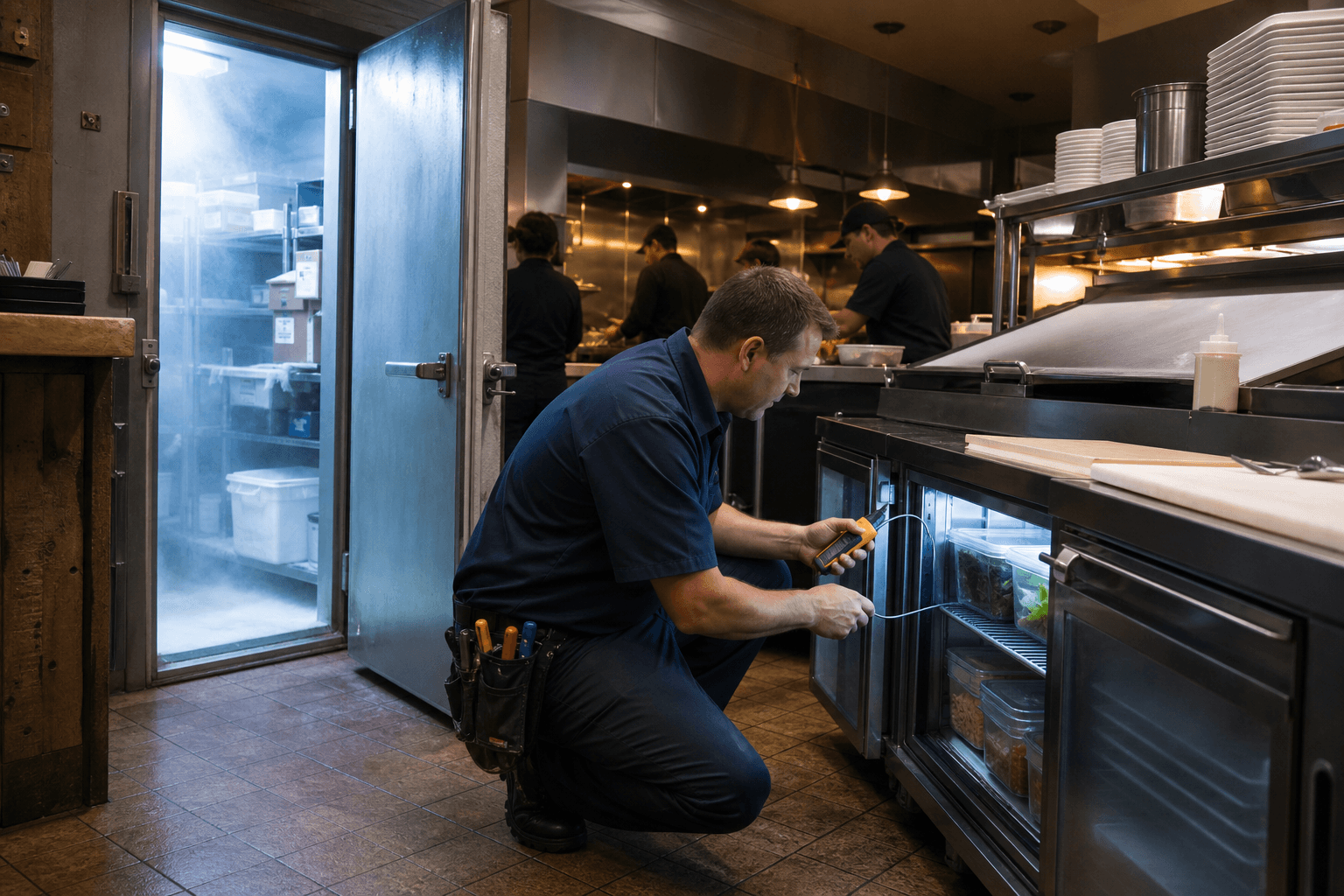
A shore restaurant in summer runs at two speeds: dead quiet at ten in the morning and fully committed by noon when the boardwalk spillover arrives. Walk-ins cycle constantly. Ice machines never catch up. Prep tables take abuse from pans going in hot.
When the box temperature drifts, the first question is always food safety. The second, asked less often but just as important for some operators, is whether the equipment size and refrigerant charge trigger environmental reporting rules on top of the health code.
Health code reality: document first, diagnose second
Inspectors expect daily temperature logs and a clear corrective-action trail. Note whether the unit recovers after defrost or whether product actually warmed. Photograph probe readings when alarms trip. That paper trail protects you in a busy kitchen where everyone remembers a different story.
From a repair standpoint, drifting temperatures usually trace to a short list: door gaskets, defrost timers, iced evaporators, low charge, or failing controllers. The fix is rarely mysterious; the urgency is real when product is on the line.
Where N.J.A.C. 7:27E enters the picture
New Jersey’s greenhouse gas monitoring rule applies to facilities with larger refrigeration systems (think substantial walk-in charges and central systems), not every under-counter reach-in on the cook line.
If your operation may be above the reporting threshold, confirm whether annual refrigeration reports are already filed through NJDEPonline. Registration and reporting stay with the facility owner; our job is to keep equipment holding temperature and diagnose failures honestly.
When in doubt, talk to your compliance advisor. When the box is warm right now, talk to us first.
Brands we see from Toms River to Atlantic City
True, Turbo Air, Beverage Air, Hoshizaki, Traulsen, Atosa, and others all appear in shore kitchens with different failure signatures: ice machines that dump wet cubes, walk-ins that frost behind the product, reach-ins that run loud then silent when the compressor protector trips.
We triage commercial calls by product risk and route density during business hours. Oil at the king valve, rising box temps with a running compressor, or a walk-in that never pulls down after defrost are not “wait until Monday” problems in July.
A summer readiness checklist for operators
Clean condenser coils on remote units before Memorial Day. Verify door seals with a dollar-bill test. Calibrate thermometers against a known reference. Schedule professional service if defrost cycles look short or ice builds unevenly on the evaporator.
The kitchens that survive August without a panic call are rarely lucky. They planned in May.
Last updated May 23, 2026